
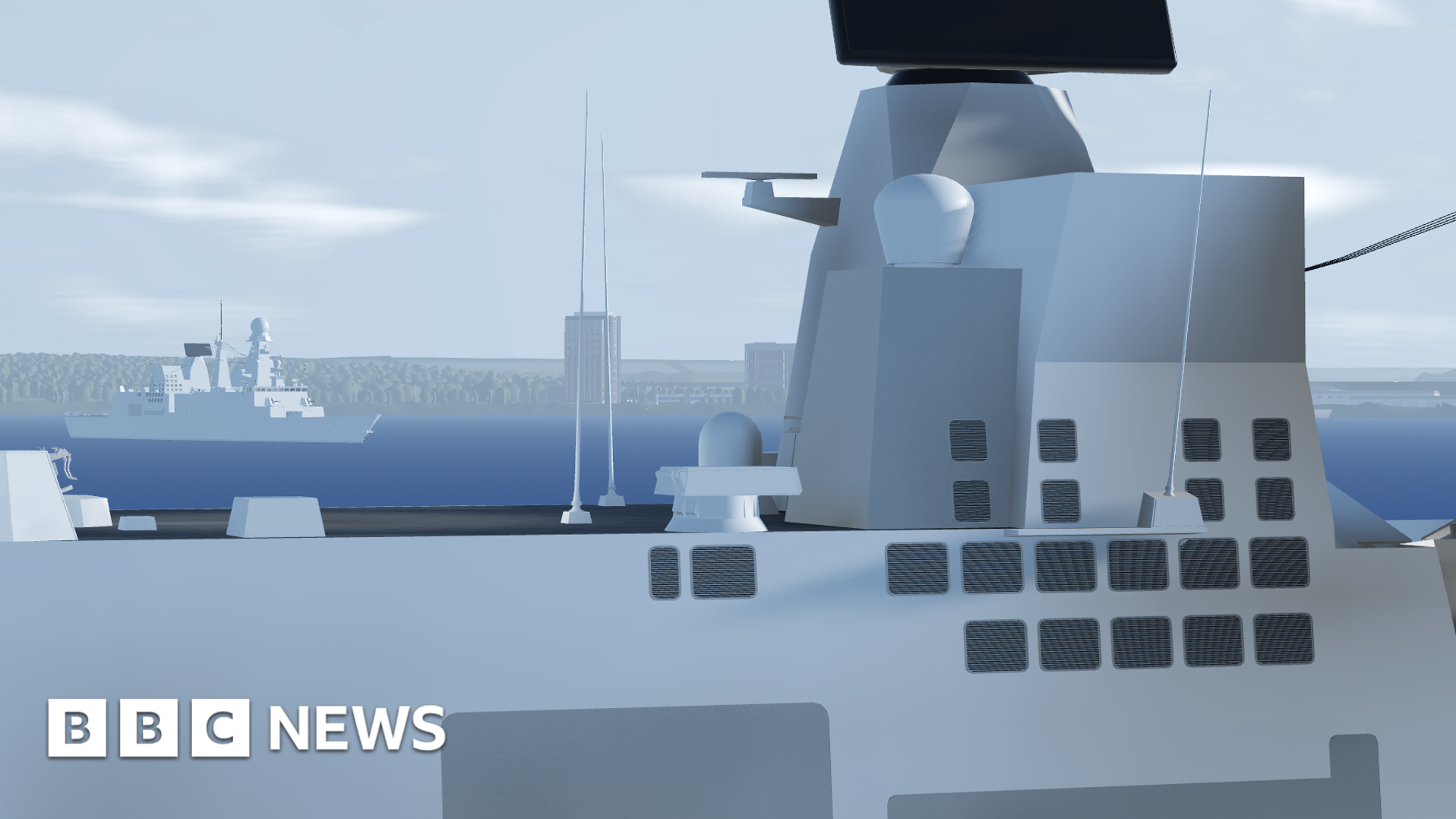
The announcement follows a series of increasingly hostile exchanges between France and Iran over Tehran’s reported deployment of ballistic missiles in the region, with French officials warning that they are considering a military response to what they describe as a growing threat to regional security.
France has confirmed that its naval assets have been placed on alert, although no deployment to the region has yet been announced. Paris has also called on the United States to consider sending a carrier strike group to monitor developments alongside French forces.
Iran, meanwhile, has accused France of escalating the situation and announced that French naval vessels will be required to pay a special fee before transiting the strategically important waterway.
The dispute has prompted criticism from Belgium, which has questioned the legality of the proposed charges, while the Central African Republic has urged France to reconsider its military posture.
The BBC has been following the developing confrontation over recent days, amid growing concerns about its potential consequences for international shipping and regional stability.
France condemns Iranian missile deployments and calls for US involvement
The latest escalation began following statements from the French ambassador to the United Nations, who expressed serious concerns about Iran’s reported deployment of advanced ballistic missile systems.
Speaking from Paris, the ambassador accused Tehran of pursuing an increasingly aggressive military strategy and called for a coordinated international response.
“We are concerned with Iran’s deployment of sophisticated weapons within the region targeting a sovereign nation.”
The ambassador went on to condemn Iran’s actions and urged Washington to consider increasing its military presence.
“We condemn these actions and henceforth call on our partners in D.C to send a Carrier Strike Group or monitor the situation alongside France.”
French officials have argued that continued Iranian weapons development and deployment could pose a threat to neighbouring states and undermine security across the wider Middle East.
The ambassador also called on regional governments to challenge what France described as Iran’s continued destabilising behaviour.
However, the precise locations of the reported missile deployments, their intended targets and the extent of the threat have not been independently verified by the BBC.
French naval forces placed on alert amid security discussions
In a subsequent statement, the French ambassador confirmed that the country’s president had endorsed the government’s earlier position on Iran.
The ambassador said France would convene a security meeting to consider its response to Tehran’s reported threats concerning the Strait of Hormuz.
“France will not sit idly by while Iran continues to develop and deploy dangerous sophisticated weapons throughout the region.”
The ambassador confirmed that French naval forces had been placed on alert but stressed that no deployment had taken place.
“French Naval Assets have been put on alert but have not deployed to the region as of now however France reserves the right to protect global interest, specifically global trade flowing in and out of the Strait of Hormuz.”
The decision to place naval forces on alert represents a significant development in France’s response, although it does not necessarily indicate that military intervention is imminent.
No timetable has been provided for the proposed security meeting, and French officials have not confirmed whether Washington has responded to their request for additional naval involvement.
Iran announces special transit fees for French naval vessels
Iran has responded by announcing that French naval vessels will be subject to a special transit fee when passing through the Strait of Hormuz.
In a statement issued from Tehran, Iran’s military leadership accused France of adopting an increasingly confrontational approach and seeking to expand foreign military activity in the region.
The statement declared:
“French vessels transiting the Strait of Hormuz will be subject to a special transit fee.”
Iranian authorities said the charges would apply specifically to official French shipping, including naval vessels, rather than civilian maritime traffic.
The Chief of the Armed Forces said:
“The measure will remain in effect for as long as France continues its current course of escalation.”
The statement concluded with a warning:
“We will defend our nation.”
Tehran has not publicly specified the amount of the proposed fee, how it would be collected or what enforcement measures would be used against French vessels refusing to comply.
The announcement raises questions about freedom of navigation through one of the world’s most strategically important waterways.
Under international maritime law, transit passage through straits used for international navigation is subject to established protections. The legality of Iran’s proposed restrictions could therefore become a further point of diplomatic contention.
Belgium condemns ‘illegal toll’ and raises concerns over maritime safety
The Kingdom of Belgium has strongly criticised Iran’s announcement, describing the proposed charges as unlawful and warning that their enforcement could endanger vessels and their crews.
In a statement issued from Brussels, Belgium’s Federal Public Service Foreign Affairs said it would not make payments under what it described as an illegal toll.
The Belgian government stated:
“The Kingdom of Belgium declines to remit any funds for the illegal toll imposed by the Government of Iran at the strait of Hormuz.”
Belgian officials warned that attempts to enforce the charges could expose maritime vessels and civilian sailors to threats, detention or seizure.
The statement further argued that the measures violated principles of freedom of navigation and innocent passage.
Belgium’s intervention has widened the diplomatic disagreement beyond France and Iran, although Tehran has subsequently clarified that its proposed charges do not apply to Belgian vessels.
Iran accuses Belgium of diplomatic ‘unprofessionalism’
The Iranian Ministry of Foreign Affairs responded sharply to Belgium’s criticism, accusing Brussels of unnecessarily escalating a misunderstanding through public statements.
Tehran said the Belgian government should have pursued direct diplomatic discussions rather than publicly condemning a measure that Iran insisted was directed solely at France.
In its official response, the ministry stated:
“The Islamic Republic of Iran finds it unfortunate that, following what appears to be a misunderstanding by the Belgian side, Brussels has chosen to bring the matter into the public sphere rather than address it through the appropriate diplomatic channels.”
Iranian officials reiterated that no other country was currently required to pay the proposed charges.
“We repeat, no country except France currently needs to pay.”
The ministry also questioned Belgium’s diplomatic approach and indicated that Tehran was reconsidering its bilateral relationship with Brussels.
Despite the increasingly critical language, Iran said it remained willing to resolve the disagreement through diplomatic channels.
The exchange illustrates how the confrontation over the Strait of Hormuz is beginning to affect relations between Iran and other European governments.
Central African Republic warns France against military escalation
The Central African Republic has also intervened in the dispute, criticising France’s calls for an expanded military presence in the region.
In a statement from Bangui, the country’s leadership warned that further military pressure on Iran could result in serious consequences for all parties, including French military personnel.
The government urged Paris to reconsider its approach and prioritise negotiations.
Referring to France’s previous military involvement in the Central African Republic, the statement said:
“We do not wish death upon the French military personnel who have previously supported our country in the fight against Seleka.”
It added:
“France’s military leadership must reconsider its actions regarding military intervention on foreign soil.”
Bangui also warned that confrontation around the Strait of Hormuz could have consequences extending far beyond the Middle East, particularly for international trade and economic stability.
The Central African Republic’s statement claimed that public sympathy for Iran had increased domestically, with some viewing the dispute through the country’s historical relationship with France and its post-colonial experience.
Those claims concerning public opinion have not been independently verified.
Despite its criticism of Paris, Bangui stopped short of advocating military action against France and instead called on all governments involved to respect national sovereignty and pursue a diplomatic settlement.
Growing divisions over how to respond to Tehran
The latest developments have exposed differing international approaches to the confrontation.
France has adopted an increasingly firm position, placing its naval assets on alert and encouraging American involvement.
Belgium has focused its criticism on the legality of Iran’s maritime restrictions and the potential risks to shipping.
The Central African Republic, meanwhile, has criticised France’s military posture and called for restraint.
Iran has maintained that its measures are a response to French actions rather than an attempt to impose wider restrictions on international shipping.
These contrasting positions could complicate efforts to establish a coordinated diplomatic response.
There are also unanswered questions surrounding the extent of France’s planned military preparations, whether the United States will become directly involved and how Iran intends to implement its announced restrictions.
What happens next?
Attention is now turning to the French government’s planned security meeting, which is expected to examine potential responses to Iran’s threats concerning the Strait of Hormuz.
A decision to deploy French naval assets, particularly alongside American forces, would represent a further escalation in the confrontation.
Meanwhile, Tehran’s announcement of special transit fees has raised the possibility of a direct maritime dispute should French naval vessels attempt to enter the strait without payment.
The response from Belgium and the Central African Republic also suggests that the diplomatic consequences are spreading beyond the two governments at the centre of the disagreement.
For now, neither France nor Iran has announced a direct military engagement, and opportunities for diplomatic negotiations remain.
Nevertheless, with French naval forces on alert, Iran threatening restrictions on French military shipping and other governments publicly taking positions, the coming days could prove decisive.
The BBC will continue to monitor the developing situation, including any French military deployments, responses from Washington and further announcements from Tehran.